by Datuk Dr Denison Jayasooria with the assistance of Mrs Jasmine Adaickalam and mr Victor Joseph
3) CRITICAL REVIEW
During the course of the discussion over the three days a number of critical points were raised which require further clarification from the Federal Government especially the lead agencies such as the Economic Planning Unit (EPU) and the Implementation Coordination Unit (ICU) at the Prime Minister’s Department.
Problem of not seeing Indian concerns as national concerns
Concern was raised that the Indian community problems were seen as a community concern rather than a national concern as most of the government agencies had not looked seriously into issues pertaining to crime, violence, urban poverty, and issues pertaining to quality of life, inadequate infrastructure for Tamil school, low recruitment and promotion opportunities in both public and private sectors.
Most often both politicians and public servants are calling on political parties and voluntary organizations to address these issues. However, the participants strongly felt that socio-economic concerns of all Malaysians should be the concern of the government and therefore public funds must be utilized to address the major concerns which are beyond the ability/capacity of the voluntary sector.
Distrust of official statistics
There was tremendous distrust towards the official figures presented in the Ninth Malaysia Plan and the Mid Term Review. Reliability of figures such as household income, income distribution and poverty are being questioned. While two individuals tried to defend the professional data gathering and analysis, a majority however felt that the statistical figures did not reflect the reality on the ground.
It was felt strongly that Government agencies should be more aggressive in defending their methodology and their analysis. Raw data must be made available in the public domain for academics and others to analyse them for the common good of all communities. There should be more public discussion on this matter including access to information pertaining to quality of life index including education, employment, income levels and many other socio-economic areas. This right to information is of fundamental importance to strengthen inclusion and participation.
Outreach is too small
While those present noted the value of the special initiatives especially for Indian youths in terms of skills training, business development and access to micro loans, it was very strongly felt that the outreach was too small to make a national impact on the young people. Therefore these programmes should be scaled up to ensure that the outreach impacts a larger number of people.
Programmes are not comprehensive
It was also noted that the special programmes were very specific and micro in nature and not comprehensive to impact the wider dimension of the community and family struggles. Marginalised people have a whole host of issues which needs addressing. Reaching young people only at the post secondary level does not take in to account the comprehensive nature of social problems at the individual, family and community levels.
Outcomes and follow through is weak
The programmes carried out are all stand alone programmes and not interconnected as they are all ad hoc grant based programmes. In a majority of the programmes carried out, there is no follow through or mapping agenda over a longitudinal level. Quantitative out-put is measured but the qualitative outcome and impact is more difficult to measure.
There is therefore a need for the agencies to build into the programme, a mapping project which can document the impact over the next five to ten years to capture the transformation experience of individuals and families.
Social awareness and social preparation is extremely weak to plug into the system
Participation in the special programmes and also in the mainstream programmes requires social preparation which enables them to have the right attitude, mindset, appreciation and which will instil self confidence. In the various programmes of the government this theme is not adequately considered and therefore participation is weak and there is an under representation of the target group.
This component must be built into the programme. Furthermore, the publicity and the dissemination of information on available opportunities is inadequate. The assistance of news agencies such as RTM (especially radio), Bernama and the Information department are most urgent and paramount. There must be a greater effort on the part of the relevant agencies to reach out to the specific target group. This could also be effectively undertaken by civil and voluntary organizations.
There must be concerted effort to enlist, encourage and fund NGOs in order to draw the direct target groups to be directly assisted. Widening the partners of community based and faith based voluntary organizations is very necessary.
Access issues hinders participation
Very often the barriers for participation are human namely, the unfriendly public official who does not seek to reach out or go the extra mile to build the confidence of the poor and low income. Unfriendly and under/uninformed front desk officers can do great damage to a noble initiative of the government.
There must also be cultural sensitivity as sometimes the environment and approach used is very culture specific. Therefore national programmes must take into account the multi cultural, and religious nature of our ethnic relations.
Coordination, delivery and implementation
There are major concerns in these areas. While the Cabinet Committee provides policy guidance, review and directions, at the implementation level all the programmes are ad hoc. This raises major concerns pertaining to planning, budgeting and delivery.
Majority of civil society and community leaders feel that there is a lack of consultation at the planning process and when funds are allocated there is very little transparency and accountability to the community.
Urgent need in the Tenth Malaysia Plan process is to budget for five years and provide adequate funding for operations and programmes. In addition, the Federal Government should establish a Community Consultative Council which meets on a quarterly basis to review feedback on developments and at the same time to highlight difficulties encountered at the grassroots especially at the implementation level. This could be even regarded as a (Critical) Social Dialogue Process.
Specific recommendations were made pertaining to this aspect such as working a criterion to register voluntary and civil society organizations which have consultative status. This will ensure that accredited voluntary and community groups are part of this process and ensure effective delivery and enable the target group ‘to plug into the system’.
----------------------
FINDINGS OF THE TENTH MALAYSIA PLAN WORKING GROUP DISCUSSIONS HELD FROM AUGUST 24 TO 26, 2009, AT THE DEPUTY MINISTER’S OFFICE IN PRIME MINISTER’S DEPARTMENT AT BANGUNAN PERDANA PUTRA, PUTRAJAYA
Monday, September 28, 2009

Findings of the Working Group Discussions (Part 1)
by Datuk Dr Denison Jayasooria with the assistance of Mrs Jasmine Adaickalam & Mr Victor Joseph
1) INTRODUCTION
A series of working group discussions on Malaysian Indians and the Tenth Malaysia Plan was hosted by YB Dato SK Devamany, Deputy Minister in the Prime Minister’s Department at Putrajaya from August 24 to 26, 2009
This programme was organized and facilitated by Datuk Dr Denison Jayasooria (UKM Institute of Ethnic Studies) to receive input and feedback on the Ninth Malaysia Plan’s policies and programmes with a view to provide input to the Tenth Malaysia Plan.
A total of forty seven people participated over the three days with a minimum of fifteen people taking part at each of the five working groups. Among them seventeen were representatives from civil society, twelve from the public sector including those from the Economic Planning Unit, nine from academic institutions both public and private and the another nine from the business and commercial sector.
The series which began on August 24, 2009 started with YB Dato Devamany stating clearly that the Prime Minister had given a directive to engage with as many community groups as possible to hear their views.
He acknowledged that while this series focused on the Indian minority, he encouraged the participants to look into similar issues that impact the poor and low income irrespective of their diverse ethnicity or religious backgrounds. What is important is, to formulate policies and programmes which will enable every Malaysian to ‘plug into government provisions’.
2) REFLECTIONS ON NINTH MALAYSIA PLAN PROVISIONS
During the course of discussion it was pointed out that there were a number of specific initiatives undertaken in addressing the Indian concerns. Following are some of those:-
Skills training opportunities are provided to Indian youths through public funded training institutions such as the Industrial Training Institutes (ILP), Giat MARA & Industrial Youth training Institute (IKBN)
EPU or the Ministry of Finance has provided special funds for the recruitment and funding of Indian youths to undertake technical/skills training in certain recognized institutions where the federal Government pays for the fees, accommodation and meals. YSS coordinates this programme.
Entrepreneurship Training courses have been introduced to Indian youths through funding provided by the Institute for Entrepreneurship training (INSKEN). This programme is also coordinated by YSS
Micro credit loans are given to Indian youths through Yayasan Tekun to undertake business and income generating projects especially to those who have completed a skills training courses. This programme is also coordinated by YSS
Micro credit loans are given to the urban poor especially women through Amanah Ikhtiar Malaysia (AIM). This programme is targeting the new urban poor through micro credit to undertake or expand a micro business. The project is directly coordinated by AIM.
A special grant was allocated to YSS to undertake social programmes towards holistic development of educationally underachieving Indian youths. This is an on-going programme undertaken since June 2001 under the PINTAS project to address social ills among Indian youths.
Special grants were allocated towards the infrastructure development of Tamil Schools especially those which are partially aided. A total of RM 216.5 million was allocated towards providing new buildings, additional blocks, upgrading buildings and purchase of furniture. This fund impacted over 200 schools.
In addressing the low participation in equity, the government ensured that a certain percentage (15%) of the shares in PNB be reserved for the Indian community thereby enabling a significant number to purchase the shares when it was publically offered.
The establishment of the Cabinet Committee on identifying issues and concerns and monitoring participation of Indians in Government programs and projects which is chaired by the Hon Prime Minister with the secretariat at the Ministry of Human Resources. This Cabinet Committee was established on July 1, 2008 and has held two meetings so far (July 1, 2008 & Feb 23, 2009). The establishment of this cabinet committee is unique as this is the first time a high level committee is established for a minority community.
------------
FINDINGS OF THE TENTH MALAYSIA PLAN WORKING GROUP DISCUSSIONS HELD FROM AUGUST 24 TO 26, 2009, AT THE DEPUTY MINISTER’S OFFICE IN PRIME MINISTER’S DEPARTMENT AT BANGUNAN PERDANA PUTRA, PUTRAJAYA
1) INTRODUCTION
A series of working group discussions on Malaysian Indians and the Tenth Malaysia Plan was hosted by YB Dato SK Devamany, Deputy Minister in the Prime Minister’s Department at Putrajaya from August 24 to 26, 2009
This programme was organized and facilitated by Datuk Dr Denison Jayasooria (UKM Institute of Ethnic Studies) to receive input and feedback on the Ninth Malaysia Plan’s policies and programmes with a view to provide input to the Tenth Malaysia Plan.
A total of forty seven people participated over the three days with a minimum of fifteen people taking part at each of the five working groups. Among them seventeen were representatives from civil society, twelve from the public sector including those from the Economic Planning Unit, nine from academic institutions both public and private and the another nine from the business and commercial sector.
The series which began on August 24, 2009 started with YB Dato Devamany stating clearly that the Prime Minister had given a directive to engage with as many community groups as possible to hear their views.
He acknowledged that while this series focused on the Indian minority, he encouraged the participants to look into similar issues that impact the poor and low income irrespective of their diverse ethnicity or religious backgrounds. What is important is, to formulate policies and programmes which will enable every Malaysian to ‘plug into government provisions’.
2) REFLECTIONS ON NINTH MALAYSIA PLAN PROVISIONS
During the course of discussion it was pointed out that there were a number of specific initiatives undertaken in addressing the Indian concerns. Following are some of those:-
Skills training opportunities are provided to Indian youths through public funded training institutions such as the Industrial Training Institutes (ILP), Giat MARA & Industrial Youth training Institute (IKBN)
EPU or the Ministry of Finance has provided special funds for the recruitment and funding of Indian youths to undertake technical/skills training in certain recognized institutions where the federal Government pays for the fees, accommodation and meals. YSS coordinates this programme.
Entrepreneurship Training courses have been introduced to Indian youths through funding provided by the Institute for Entrepreneurship training (INSKEN). This programme is also coordinated by YSS
Micro credit loans are given to Indian youths through Yayasan Tekun to undertake business and income generating projects especially to those who have completed a skills training courses. This programme is also coordinated by YSS
Micro credit loans are given to the urban poor especially women through Amanah Ikhtiar Malaysia (AIM). This programme is targeting the new urban poor through micro credit to undertake or expand a micro business. The project is directly coordinated by AIM.
A special grant was allocated to YSS to undertake social programmes towards holistic development of educationally underachieving Indian youths. This is an on-going programme undertaken since June 2001 under the PINTAS project to address social ills among Indian youths.
Special grants were allocated towards the infrastructure development of Tamil Schools especially those which are partially aided. A total of RM 216.5 million was allocated towards providing new buildings, additional blocks, upgrading buildings and purchase of furniture. This fund impacted over 200 schools.
In addressing the low participation in equity, the government ensured that a certain percentage (15%) of the shares in PNB be reserved for the Indian community thereby enabling a significant number to purchase the shares when it was publically offered.
The establishment of the Cabinet Committee on identifying issues and concerns and monitoring participation of Indians in Government programs and projects which is chaired by the Hon Prime Minister with the secretariat at the Ministry of Human Resources. This Cabinet Committee was established on July 1, 2008 and has held two meetings so far (July 1, 2008 & Feb 23, 2009). The establishment of this cabinet committee is unique as this is the first time a high level committee is established for a minority community.
------------
FINDINGS OF THE TENTH MALAYSIA PLAN WORKING GROUP DISCUSSIONS HELD FROM AUGUST 24 TO 26, 2009, AT THE DEPUTY MINISTER’S OFFICE IN PRIME MINISTER’S DEPARTMENT AT BANGUNAN PERDANA PUTRA, PUTRAJAYA
Tuesday, September 15, 2009
Policy Gaps & Development Planning

Eighteen people gathered at the office of YB Datuk Devamany at the Prime Minister’s Office in Putrajaya on Sept 15, 2009 to hear Dr Kamal Sadiq highlight five gaps in Malaysian society which impacts development planning and Malaysian Indians. He drew these conclusions when he participated in the five working group discussions in August 2009. The five gaps are:-
The first is the identity gap in which Malaysian Indians are often only identified by just the Tamil section of the community. However there is a rich diversity of sub ethnic and religious groupings.
The second gap is the private sector gap as the Indian community is only focused in securing benefits from the public sector ignoring the private. Therefore there is a need to look at the private sector as wealth creation opportunities in the k-economy is in the private commercial sector
The third gap identified is the delivery gap. Although millions of ringgit is spent for the Indian community however the Indian community believes very little reaches them. Therefore a more inclusive policy must be developed.
The credibility gap is the fourth dimension. Here the community disbelieves all official data released. The fifth and final is the communication gap which fosters a climate of secrecy and breeds incompetence.
His views were well received and it further stimulated an interesting discussion. One of the participants Dr Sivamoorthy suggested an additional which he called the responsibility gap. By this he means that the State had a responsibility to all its tax payers and not just to selective groups.
Sunday, September 13, 2009
FOLLOW UP MEETING

Date: Sept 15, 2009 (Tuesday)
Time: 9.30am till 12.30pm
Venue: YB Devamany’s Office at Aras 3, Blok Barat, Bangunan Perdana Putra, Putrajaya
AGENDA
1) Dr Kamal Sadiq’s Reflections
I have invited Dr Kamal the visiting fellow at the Institute of Ethnic studies, UKM to make some of his observations. He is an expert in South Asian Studies and his reflections will give us some independent views. He will present a brief paper highlighting his views, observations and reflections on Malaysian Indian concerns and remedies via public policy intervention drawing parallel examples of Muslim minorities in India.
2) Summary of working group discussions
Victor managed to write some notes and I am working them out as a summary document of the finding of our working group discussions. This document will form the core of our input for the 10th Malaysia Plan. However there will be more work to be done in this area through consultative discussions.
3) Setting future meetings & determining areas of work
We will also briefly also discuss further areas for discussion and planning.
Please confirm your participation. We are hoping that about 12 to 15 of us can meet to review the above three matters. Looking forward to hearing from you soon. Reply by email: denisonjayasooria@gmail.com or sms me at 019 381 0914.
Tuesday, September 1, 2009
Participants at the Working Groups

A total of forty seven people participated at the five working group sessions which were held between August 24 and 26, 2009. Basically we had at least fifteen people in most sessions. These were kept small in order to foster closer discussion and integration.
There were no papers presented nor any expert invited to do a presentation as the focus was upon receiving feedback from the perspectives of the participants. Dato J Jega of the Friendship Group took the extra mile on his own initiative by putting his thoughts on a nineteen page paper.
Of the forty seven participants, seventeen were from civil society and voluntary organization. Twelve were from the public sector, nine from academic institutions including public and private institutions of higher learning. Another nine were from the private and business sector. This is fair representation for policy discussion and feedback. However in terms of gender balance women were inadequately represented as there were only eleven women out of the forty seven who participated.
A number who were present also suggested that separate discussions should be held with those who had been in the programmes specially designated for the Indian community. These could be among the youth who had or are still undertaking skills and entrepreneurship training or even among the ones who had received micro loans through Yayasan Tekun.
In addition meeting the women in the urban poor micro loans thorough Amanah Ikhtiar Malaysia (AIM) will also provide valuable input especially for enlarging the size of the outreach. These could be held in the next phase of formulating the recommendations for the 10th Malaysia Plan.
Listed below are the people who participated in the three days programme which was hosted by the Deputy Minister in the Prime Minister’s Department. We thank YB Datuk Devamany and his officers especially Mr Vivek his private secretary for their kind cooperation and coordination.
Participants at the working group sessions held from August 24 to 26, 2009:-
1) Anthony Arul, Shelter
2) Balakrishnan, Head, Department of International and Strategic Studies, UM
3) Brian Lariche, Director Lariche Community, Kuala Lumpur
4) Dheer Singh, UPSO Chairman
5) Denison Jayasooria, Datuk Dr, Principal Fellow, KITA-UKM
6) Devamany, YB Dato SK, Deputy Minister in Prime Minister’s Department
7) Doris Selvaratnam, Dr, Senior Lecturer, Faculty of Economic & Business, UKM
8) Elanjelian, Ve (Malaysian Community & Research Foundation (MCEF)
9) George, J Schwartz, Member of Parole Board, Ministry of Home Affairs
10) Jaya Partiban, Datin Paduka, Public Service Commission
11) James Nayagam, Chairman, Shelter
12) Jasmine Adaickalam, Executive Secretary, Yayasan Strategik Sosial
13) Jegathesan, Dato J, Advisor Sathya Sai Baba Council
14) Joseph Adaikalam, Prof Dato, VC, Binary University College
15) Kalaimani, Dr S, Consultant, SMR Group
16) Malini Ramanan, PhD candidate, IKMAS, UKM
17) Kamal Sadiq, Dr, Visitng Fellow, Institute of Ethnic Studies, UKM
18) Komalam Kesawan, EPU, Prime Minister’s Department
19) Mahendran Arumugam, Vice President, Sathya Sai Baba Organisation in Malaysia
20) Manikam Krishan, Director (Policy Research), Yayasan Strategik Sosial (YSS)
21) Manjit Kaur, Dr
22) Mohd Iqbal, Dato, Farlim Group (Malaysia) Bhd
23) Mohd Zaulkifih Hasnin, EPU, Prime Minister’s Department
24) Mohanadas, Mej Jen (R) Dato’Pahlawan Dr.R, Deputy VC, MAHASA UC
25) Nithi Nesadurai, Director Nesa Communications
26) Paul Sinappan, Dr, People Service Organisation, Batang Berjuntai
27) Ragunath Kesavan, Chairman, Bar Council Malaysia
28) Rajendran, Dr NS, Director, Centre for Global Studies, UPSI
29) Ramachandran, R, Policy head, PIKOM
30) Rendatil Jennah bt. Abdul Waheb Zen, EPU, Prime Minister’s Department
31) Sahadevan, Datuk B, CEO, NLFCS
32) Sa’idah Haji Hashim, EPU, Prime Minister’s Department
33) Saravan M Sinappan, Era Consumer Malaysia
34) Siti Nafisah Che Al Razab, EPU, Prime Minister’s Department
35) Sivamoorthy Shanmugam, Dr, Advisor JIBA/MIBA, CNM Consultancy Network
36) Siva Subramanium, Dato, Human Rights Commission of Malaysia (SUHAKAM)
37) Stephen Doss, Head of R&D, Yayasan Budi Penyayang Malaysia
38) Suhana Md Saleh, EPU, Prime Minister’s Department
39) Suresh Kumar, Dr, Managing Director, Strasys Solutions
40) Thaiveegan, Dato A, Deputy CPO Selangor Police
41) Thambirajah Datuk Dr, Founder/Director Sri Murugan Centre (SMC)
42) Tharim Cecil, Trainer Shelter
43) Thirunaukarasu Subramanium, Lecturer, Faculty of Arts & Social Science, UM
44) Unnikrishnan Menon, Mimos Consultant on Integrity & Values
45) Venki Sankar, KL& Selangor Indian Chamber of Commerce & Industry
46) Victor Joseph, Director, Strasys Solutions
47) Vivekananthan, Private Secretary to YB Dato SK Devamany
Thursday, August 27, 2009
Academics meet to discuss Tenth Malaysia Plan

KITA-UKM hosted its first focus group discussion session among academics on August 27, 2009 (Thursday) at 10am to 1pm at the KITA-UKM Conference Room. This was attended by Prof Dr Ragayah Hj Mat Zain (IKMAS), Prof Mansor Mohd Noor, Dr Vijei, Mr AnisYusal, Dr Kamal Sadiq and Datuk Dr Denison Jayasooria
In this first gathering Prof Ragayah and Prof Mansor presented their findings from their earlier research by extracting key data, implications and recommendations which have relevance for the minority communities in general and for Malaysian Indian community in particular.
Other UKM academics who have agreed to be part of this academic focus group are Prof Chamhuri Siwar (Lestari) and Prof Dato Dr Abdul Raham Embong (IKMAS). They will be presenting their papers at the next gathering.
One major exercise being undertaken by the KITA-UKM team is how do to formulate a development framework which is more inclusive for the bottom 40% of our community especially among the low income groups where relative poverty is the central issue.
Much of poverty focus has been upon the hardcore poor using the poverty line index (PLI). With rural-urban migration how should public policy makers formulate programmes and provisions to address socio economic inequalities among low income families in the urban poor locations.
Prof Ragayah in her presentation made references to the visibility and concentration of low income Indian families in certain urban locations. This must be address by greater access and social inclusion initiatives.
Prof Ragayah also showed through her analysis of data that the issue is not some much inter ethnic income inequalities but intra ethnic inequalities. This aspect of income inequalities within the community is being missed by politicians who continue to focus on race based arguments, when the data is now showing the issues are about socio-economic class and gender which are cutting across all the ethnic groups.
Prof Manor’s inter ethnic studies also shows the struggles of the bottom 40% of Malaysian society who are currently unhappy with delivery concerns. The concerns expressed cuts across all the racial and ethnic groups especially in urban poor locations. He also notes that public policy and policy makers are not giving adequate attention to this dimension.
In the course of the discussion it was pointed out that the civil service must become more sensitive and more responsive to the low income families irrespective of ethnic origins or gender differences. In addition often people are also discriminated based on political affiliations at the grassroots. This too must be avoided in order to ensure that access and equitable opportunities is made available to all Malaysians.
Community leaders providing input

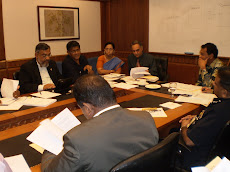
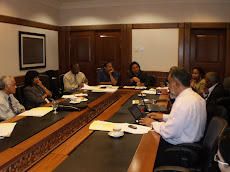
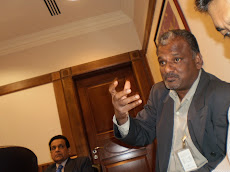
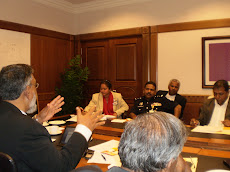
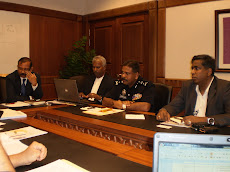
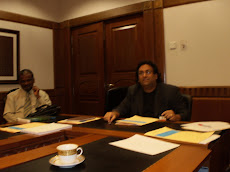
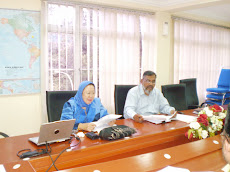
The Deputy Minister in the Prime Minister’s Department, YB Dato S.K.Devamany with the assistance of KITA-UKM hosted five Working Groups to receive input pertaining to Malaysian Indians. These were held from August 24 to 26, 2009 at the office of Deputy Minister in Putrajaya
The five areas were:
Poverty & Social Issues (August 24 from 10am to 1pm)
Civil service Recruitment & Promotions (August 24 from 2pm to 5pm)
Economic, business & entrepreneurial development (August 25 from 10am to 1pm)
Education/ Training & Human Capital Development(August 25 from 2 to 5pm)
Effective delivery & implementation (August 26 from from 10am to 1pm)
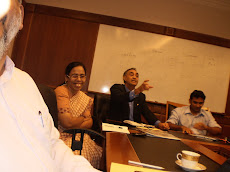
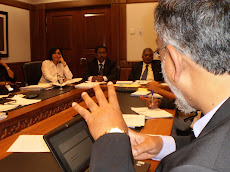
Each of the working groups had between 17 to 26 people from a cross section of the community including a number of EPU staff. There was a strong participatory dimension to the discussions and all had an opportunity to make the comments and recommendations.
A simple framework which guided the discussion was based on three key points:-
We have also indentified a three- fold framework for analysis:
Review the policies & provisions in the Ninth Malaysia Plan
Analyse the effectiveness, noting achievements & challenges
Chart recommendations for the Tenth Malaysia Plan
These discussions were facilitated by Datuk Dr Denison Jayasooria at the same time all present make some important contributions. Mr Victor Joseph was busy with his note book undertaking a basic record of all the exchange of ideas.
A report of the working group’s findings will be finalized by this weekend and made available to all the participants.
Subscribe to:
Posts (Atom)